Today
Open
10:00-18:00
Sabine Zorn (Head of Conservation/Restoration of Graphic Art and Photography, Hamburger Kunsthalle)
Dr. Bernd Pappe (freelance restorer and art historian specialising in portrait miniatures)
Thursday, 5 February 2026, 11 a.m.
Thursday, 5 February 2026, 7 p.m.
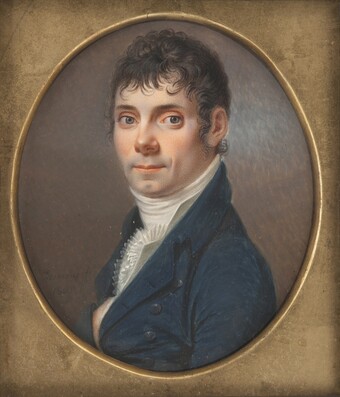
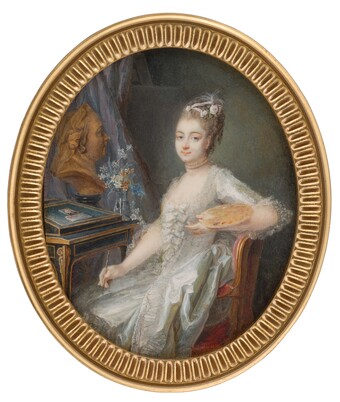
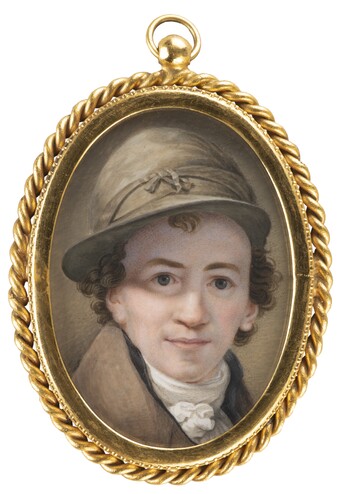
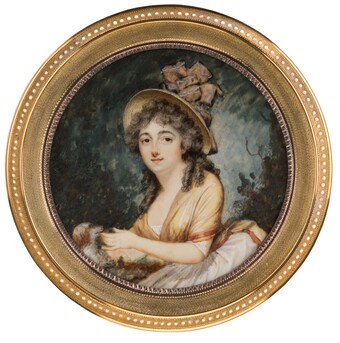
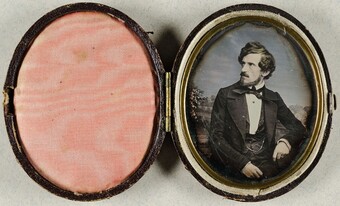
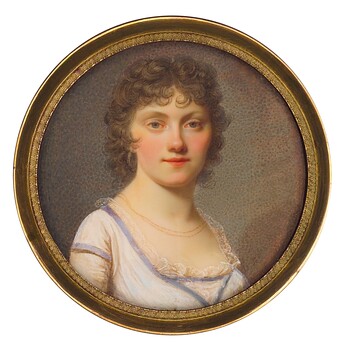
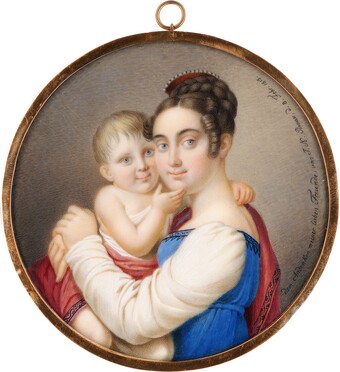
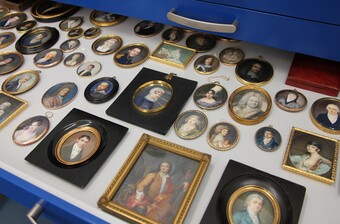
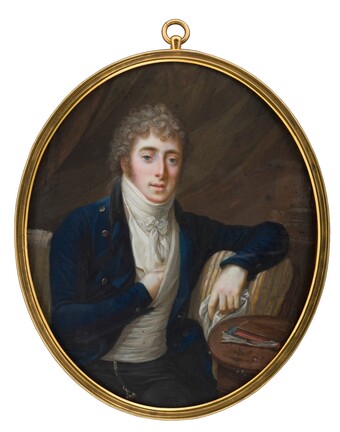
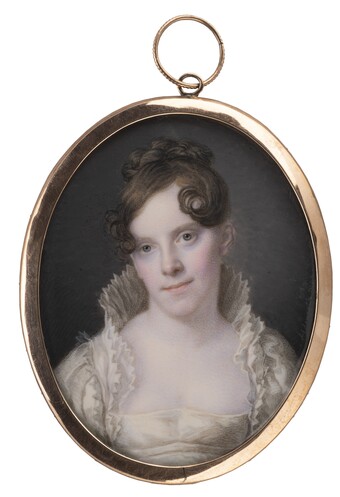
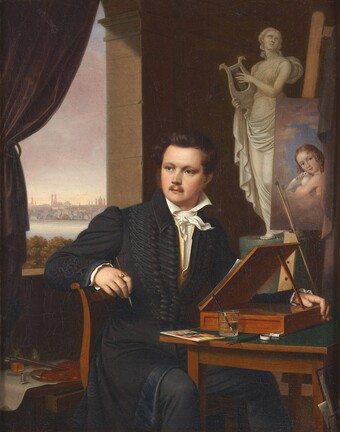
With FOR YOUR EYES ONLY. Miniatures from the Romantic Era, the Hamburger Kunsthalle is presenting its first major exhibition devoted to the multifaceted art of miniature painting in Hamburg, from its heyday circa 1800 to the 1840s, when it was replaced by early photography. The show is based on portrait miniatures from the Kunsthalle’s own collection that were restored and catalogued in 2023–24. Around 60 of these miniatures will be shown for the first time here, together with some 150 works on loan from European and private collections, some of them also making their public debut. Accompanying the miniature portraits are a number of paintings, drawings, prints and photographs, for example a self-portrait by the painter and miniaturist Bernhard Peter von Rausch (1793–1865). This material sheds light on how miniatures were made as well as their special function and the technical modifications they required. In total, over 250 objects are on display in the Harzen Cabinet that tell of an era marked by social transformation, European exchanges and technological innovations.
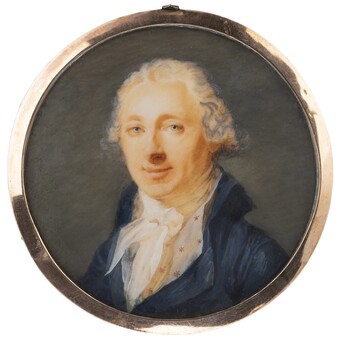
Even today, people still like to carry a likeness of a loved one on their person. Before the advent of photography, such miniature portraits were precious one-offs that took hours to paint. Their small format – usually around 6 to 10 cm – and skilled execution in watercolour and gouache on wafer-thin ivory plates, sometimes backed with silver foil, hold an enduring fascination. Set in frames, brooches or cases, these miniatures were among the most personal and intimate likenesses people had painted of themselves. The miniaturists held several sittings with their clients, painting »ad vivum«, often on specially developed painting desks. One such desk from the estate of the miniaturist Jean-Baptiste Jacques Augustin (1759–1832) is exhibited here for the first time, along with painting utensils and measuring instruments such as a pantograph for the true-to-scale reduction of drawings. These aids illustrate the traditional technique used to produce minia-tures on ivory and white-primed paper as well as reproduction methods devel-oped in the late eighteenth century known as Bou-Magie and Physionotrace.
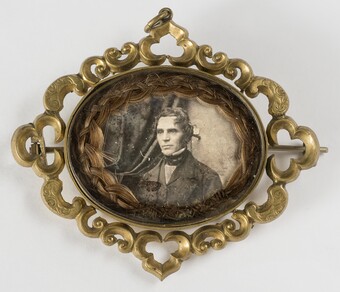
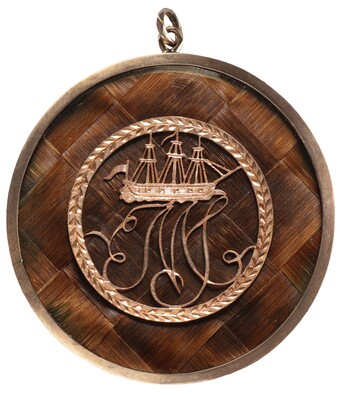
The commission to make a miniature arose from an intimate relationship between two people. The likeness was intended only for the eyes of the recipient, who might wear it as jewellery – often directly over the heart – and could admire it at will. Often, such portraits were designed to keep memories alive in the event of a long separation or to provide comfort after the loss of a loved one. Added locks of hair, artful plaits, inscriptions or symbolic messages hidden in the portrait in the form of flowers, objects or animals underscore the personal nature of these works while offering a glimpse of the emotional climate in the period around 1800.
Portrait miniatures were widespread in Europe during that era. No longer reserved for the nobility, they enjoyed increasing popularity among the aspiring bourgeoisie – including in Hamburg, which experienced an economic upswing in the late eighteenth century. After the setbacks of the Napoleonic era, a prolonged period of prosperity would have a lasting influence on the arts scene in the Hanseatic city. The first private collections were formed, the Kunstverein was founded in 1817, and exhibitions, liberal auction laws and new techniques such as lithography and later daguerreotype contributed to Hamburg’s rapid rise as an important northern art centre.
Internationally renowned miniaturists such as Giovanni Domenico Bossi (1767–1853), Carl Friedrich Demiani (1768–1823), Pierre-Louis Bouvier (1765–1836), Charles Hénard (1756–1813), Jan Gottlieb Jannasch (ca. 1755–1804) and Edmé Quenedey (1756–1830) lived and worked in Hamburg for a time. And the Hanseatic city itself produced some outstanding artists during this period, including Leo Lehmann (1782–1859), Ernst August Abel (1720–1790), Karl Friedrich Kroymann (1781–1849) and Christopher Suhr (1771–1842). Friedrich Carl Gröger (1766–1838) and Heinrich Jakob Aldenrath (1775–1844) were particularly influential.
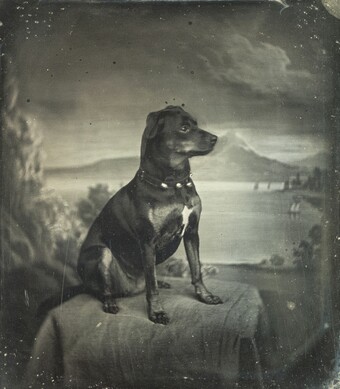
With the invention of photography in 1839, a medium rose to popularity that would take over the function of the portrait miniature and eventually replace it completely. The daguerreotype (also known as helio-graphy) made it possible to produce small-format portraits that were not only more realistic but also sig-nificantly faster to realise. A sitting for a miniature portrait soon took less than a minute. Thanks to the low cost of production, artists could now attract a new clientele. Carl Ferdinand Stelzner (1805–1894) from Hamburg and his wife Caroline (1808–1875) initially painted miniatures before Carl Ferdinand in par-ticular successfully turned his attention to portrait photography in 1842. And yet, the portrait miniature did not go completely out of fashion. The artist Enrichetta Fioroni-Narducci (1806–1892), who worked in Rome, and her sister Teresa Fioroni (1799–1880), for example, augmented their income with miniature versions of famous paintings that were extremely popular with mid-nineteenth-century travellers. The Kunsthalle is home to five of their works, on display in the exhibition.
The exhibition is accompanied by a publication (Michael Imhof Verlag, edited by Sabine Zorn and Bernd Pappe, approx. 160 pages), which is available in the museum shop or at www.freunde-der-kunsthalle.de for a price of 29 euros, as well as in bookstores.